







Behavior
Latest News
Advertisement
Video Series

Latest Videos




Shorts

0:47
Are your patients showing these signs of stress?
a month ago
by
Ori Stollar M.Sc., DVM, DACVB(+2 more)
0:33
Teaching feline communication can help prevent stress-related health issues
2 months ago
by
Tiffany Tupler, DVM, CBCC-KA, HABc(+1 more)

1:06
What 'positive reinforcement' actually means
4 months ago
by
Christopher Pachel, DVM, DACVB, CABC(+1 more)

0:52
Feline pheromones and stress: Identifying early behavioral cues
5 months ago
by
Tiffany Tupler, DVM, CBCC-KA, HABc(+1 more)
0:38
What friendly cat behavior actually means
5 months ago
by
Tiffany Tupler, DVM, CBCC-KA, HABc(+1 more)

4:00
The Weekly Vet Report: FDA warning, 2026 parasite risk forecast, & more
5 months ago
by
Abi Bautista-Alejandre, Assistant Editor

4:00
The Weekly Vet Report: Lepto on the rise, new screwworm fly facility, & more
7 months ago
by
Abi Bautista-Alejandre, Assistant Editor
0:47
Does your client know their dog is a teenager? Why understanding this stage matters
7 months ago
by
Christopher Pachel, DVM, DACVB, CABC(+1 more)
0:47
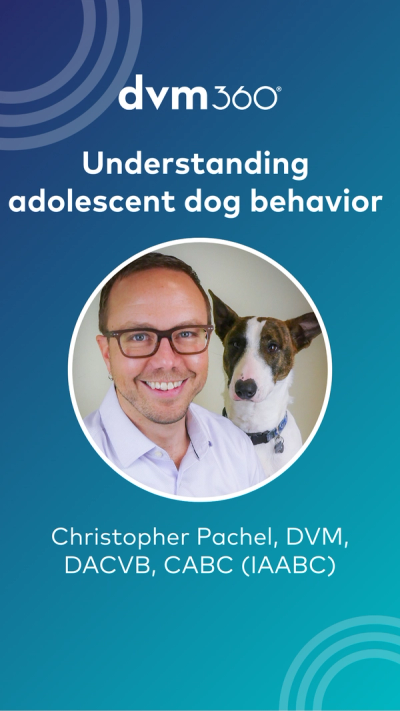
Understanding adolescent dog behavior
8 months ago
by
Christopher Pachel, DVM, DACVB, CABC(+1 more)

1:28
Why voluntary head dunking works for canine heatstroke
9 months ago
by
Bob Alaburda, Associate Editorial Director
Podcasts









CE Content





























Advertisement
More News

In this Q&A, Tiffany Tupler, DVM, CBCC-KA, HABc, breaks down the feline behaviors that are most commonly misread by owners, as well as the role veterinary teams can play in setting the record straight.

Commentary: The hidden harm of inappropriate language about cats in veterinary and social media spaces
Published: | Updated:
The authors discuss feline behavior and how negative labels can influence patient care.

Tiffany Tupler, DVM, CBCC-KA, HABc, explains why this seemingly problematic behavior is actually normal for cats—and how clear communication can help pet owners understand and manage it.

Annie Valuska, PhD, provides an overview of the Ease program supported by Purina.


Studies show that about half of surrendered dogs are adolescents, explains Christopher Pachel, DVM, DACVB, CABC (IAABC).

A veterinary acupuncturist discusses observed cognitive changes in senior patients receiving acupuncture therapy and what human research may suggest.

In his lecture at WVC 2026, Franklin McMillan, DVM, DACVIM, DACAW, challenges veterinarians to look beyond physical injuries to recognize and treat the persistent emotional scars of psychological trauma in canine patients.

Purina ProPlan and Ease are working together to help veterinarians obtain expert resources for behavior cases.

A new study suggests common saliva measures may align with how dogs perform on a widely used temperament test. Can biomarkers add an objective layer to behavior-based screening?
Annie Valuska, PhD, provides insights into how miscommunication from pet owners can result in problematic pet responses.
Annie Valuska, PhD, describes one pet action that owners cite as a reason for surrendering their cat.
An 8-month puppy recheck gives veterinarians a chance to set expectations, normalize adolescent behavior, and guide clients before challenging teenage behaviors lead to frustration or repair work.
Adolescent dogs aren’t just 'difficult,' their brains are under construction. In this video, Christopher Pachel, DVM, DACVB, CABC, explains the neuroscience behind the teenage phase.
Training teenage dogs isn’t the same as training puppies or adults—but why? Christopher Pachel, DVM, DACVB, CABC (IAABC), breaks it down.

In this guide to the canine adolescent years, Christopher Pachel, DVM, DACVB, CABC (IAABC), breaks down this critical phase—from hormones to the prefrontal cortex—based on his 2026 VMX session in Orlando, Florida.

In this video, Christopher Pachel, DVM, DACVB, CABC (IAABC) emphasizes the importance finding the right solution for each patient.
Christopher Pachel, DVM, DACVB, CABC, explains how veterinarians can tailor medication plans for dogs with separation anxiety by matching maintenance or situational drugs to each patient’s schedule and needs.

Christopher Pachel, DVM, DACVB, CABC (IAABC), discusses whether a separation anxiety case warrants medication in this interview with dvm360.
Why do cat wag their tails? Annie Valuska, PhD, explains this behavioral cue and more in a dvm360 interview.

Purina has announced the 3 recipients of its 2026 Sponsorship for Human-Animal Bond Studies.
Interpreting feline behaviors (Part 1)
Published: | Updated:
What does it mean when a cat hisses? Annie Valuska, PhD, explaine in a dvm360 interview.
Interpreting canine behaviors (Part 2)
Published: | Updated:
Annie Valuska, PhD, principal scientist for the pet behavior team at Purina, discusses common ways for dogs to convey a calming signal.
Annie Valuska, PhD, principal scientist for the pet behavior team at Purina, discusses one of the most common ways for dogs to convey emotions.

Learn how to identify subtle behavioral changes, work with caregivers, and use a multimodal approach to manage pain effectively.
Advertisement
Advertisement
Trending on dvm360
1
As pets live longer, veterinarians see more cases of cognitive decline, Texas A&M expert says
2
Five practical pain management tools in hospice care
3
How to transition pets with kidney disease to therapeutic diets without a fight
4
Weekly Vet Report: Accreditation changes could affect veterinary education, new canine diabetes guidelines & more
5